Application Aware Hosting
“Managed Hosting” Doesn’t Mean What It Used To
For eCommerce stores running on Magento, Adobe Commerce, or mission critical custom apps on Shopify Plus — the definition needs to change.
A few years ago, “managed hosting” was a meaningful upgrade. It meant someone else handled the server: patching the OS, monitoring disk space, restarting services when they fell over. For most websites, that was enough. The website was the server.
That is no longer true for eCommerce.
What your store actually is today?
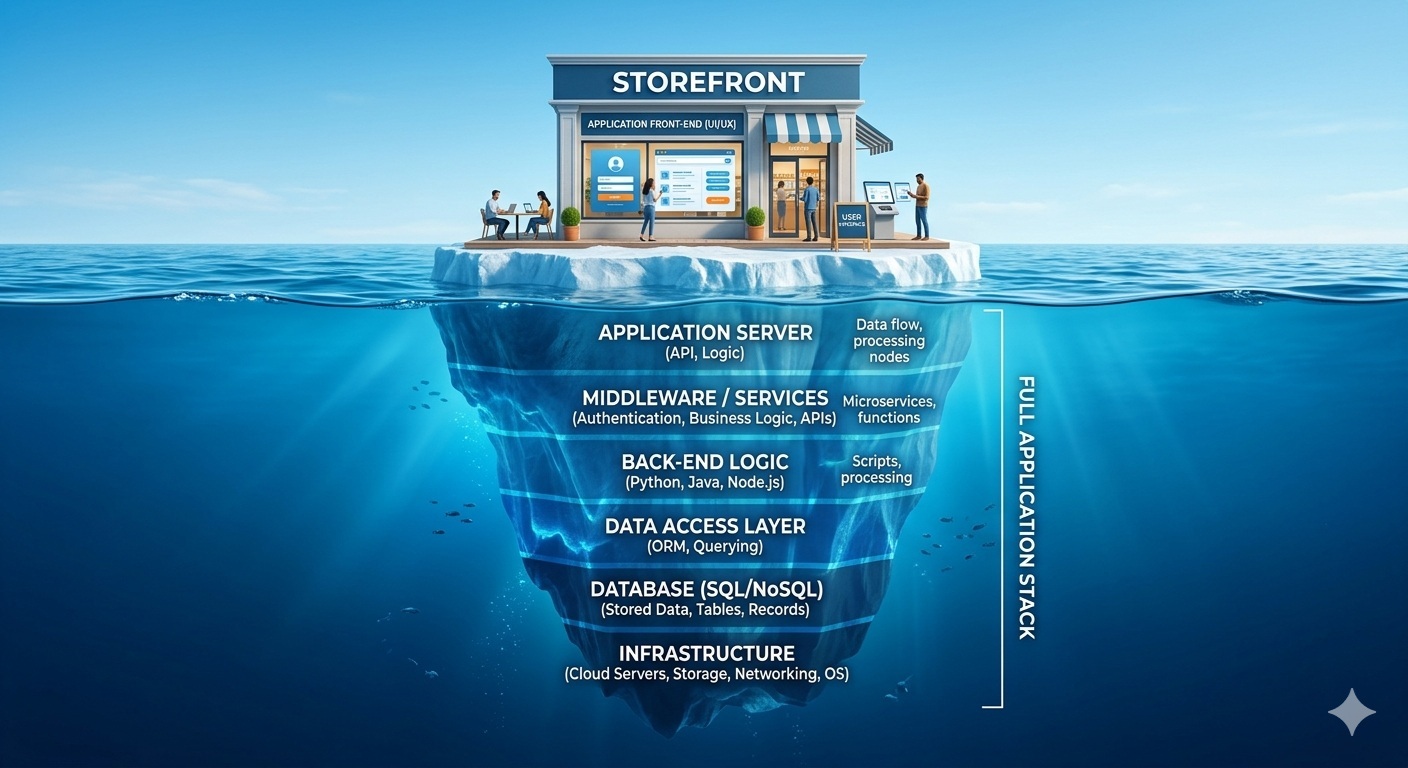
A modern eCommerce operation is not a single application on a single server. It is a constellation of interconnected systems, each of which can fail independently, and several of which sit entirely outside your hosting infrastructure.
Take a Magento store at any meaningful scale. A customer request doesn’t touch one application. It moves through Varnish (full-page cache), Nginx, PHP-FPM (your application pool), Redis (sessions and cache), MySQL via ProxySQL, RabbitMQ (async order processing), and OpenSearch (catalogue search). Six distinct components. Six independent failure modes. A problem in any one of them can manifest as a slow checkout, a broken search, or a stalled order. None of them will necessarily spike your CPU or memory.
Now add what lives around the store. A POS application. A CRM monitoring orders and abandoned carts. An OTP service handling authentication at login and checkout.
Middleware sitting between your store and your payment gateway, managing retries and return processing. A warehouse connector. An ERP sync.
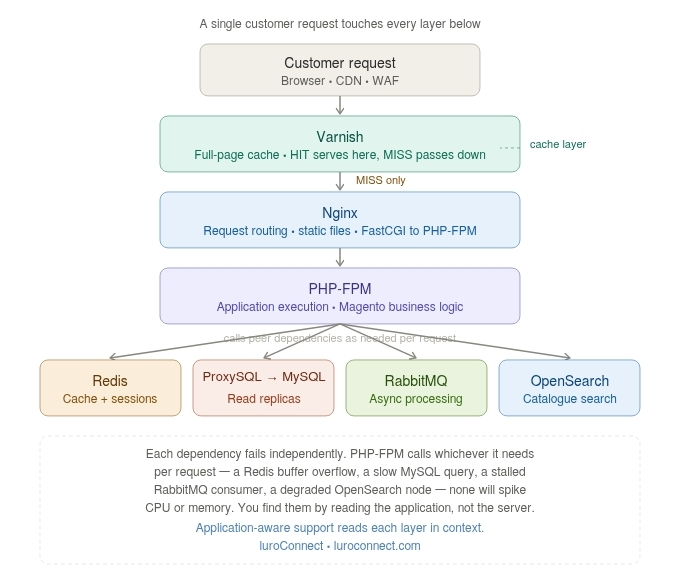
Some of these run on your infrastructure. Some run on third-party platforms. Some are SaaS tools your agency integrated during a project two years ago. All of them are load bearing.
Your hosting provider monitors the server. Who is monitoring the application?
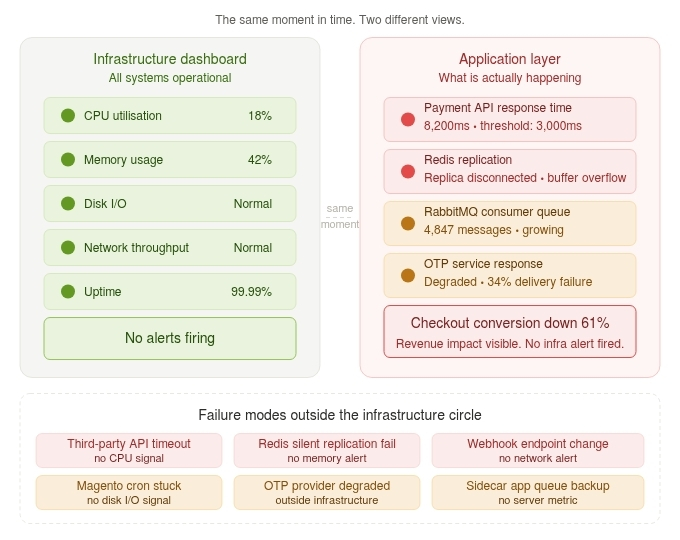
The failure modes that don’t look like infrastructure failures.
A third-party API — shipping estimates, tax calculation, payment gateway — starts responding in eight seconds instead of 800 milliseconds. Your server is healthy. CPU is fine. Memory is fine. But every checkout is eight seconds slower and conversion is falling. The issue is not on your infrastructure at all. It is on a dependency your infrastructure monitoring cannot see.
A Redis replica disconnects silently. Not a crash — a overflow under a write-heavy cron job. The server looks busy because it is busy: rebuilding cache on every request instead of serving it. No infrastructure alert fires. The right signal is in the Redis replication log, cross-referenced against the cron schedule. You find it by reading the application, not the server metrics.
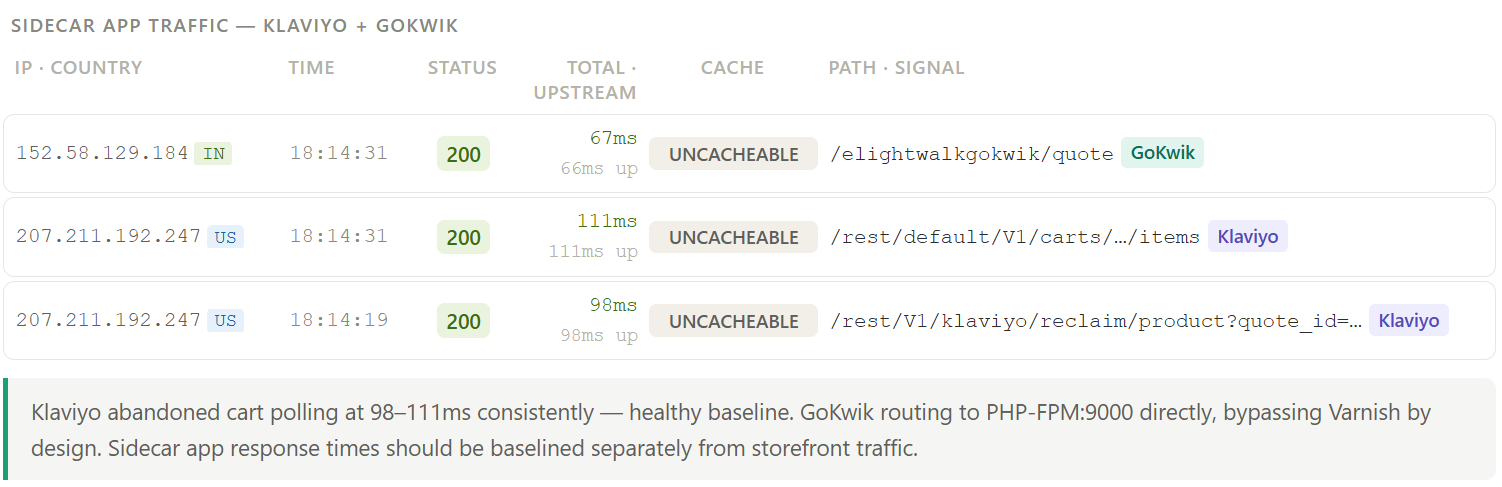
A merchant on Shopify Plus runs custom middleware, an OTP application, a sidecar CRM, or a POS application alongside their store. Shopify itself is up. But the OTP application is down and every transaction is failing. The hosting dashboard shows no problem. The merchant is losing sales.
These are not edge cases. They are the category of incident that causes the most
business damage and gets diagnosed the slowest, precisely because they do not fit the pattern that infrastructure monitoring is built to catch.
What “managed” needs to mean now?
The original definition of managed hosting was appropriate for its time. When an eCommerce store was a single application on a server, managing the server was managing the store. What has changed is the application itself — the number of components, the external dependencies, the custom integrations that are now standard parts of any serious eCommerce operation.
A more complete definition covers the application stack: what each component does, what it depends on, what a failure in it means for the business, and how quickly someone who understands all of that can diagnose and respond.
In practice, this means:
Knowing the dependency map. For a Magento store, that means understanding the full request path from Varnish to MySQL and every layer between. For a merchant running custom middleware and sidecar apps alongside a SaaS platform, it means understanding the components they own and operate — and what breaks when any one of them does.
Monitoring application responses, not just server metrics. Response times and error rates at the application layer are the primary health signal. Upstream dependency health — every external API, every queue, every cache layer — needs to be instrumented and watched. Infrastructure metrics come into the analysis when application signals point there.
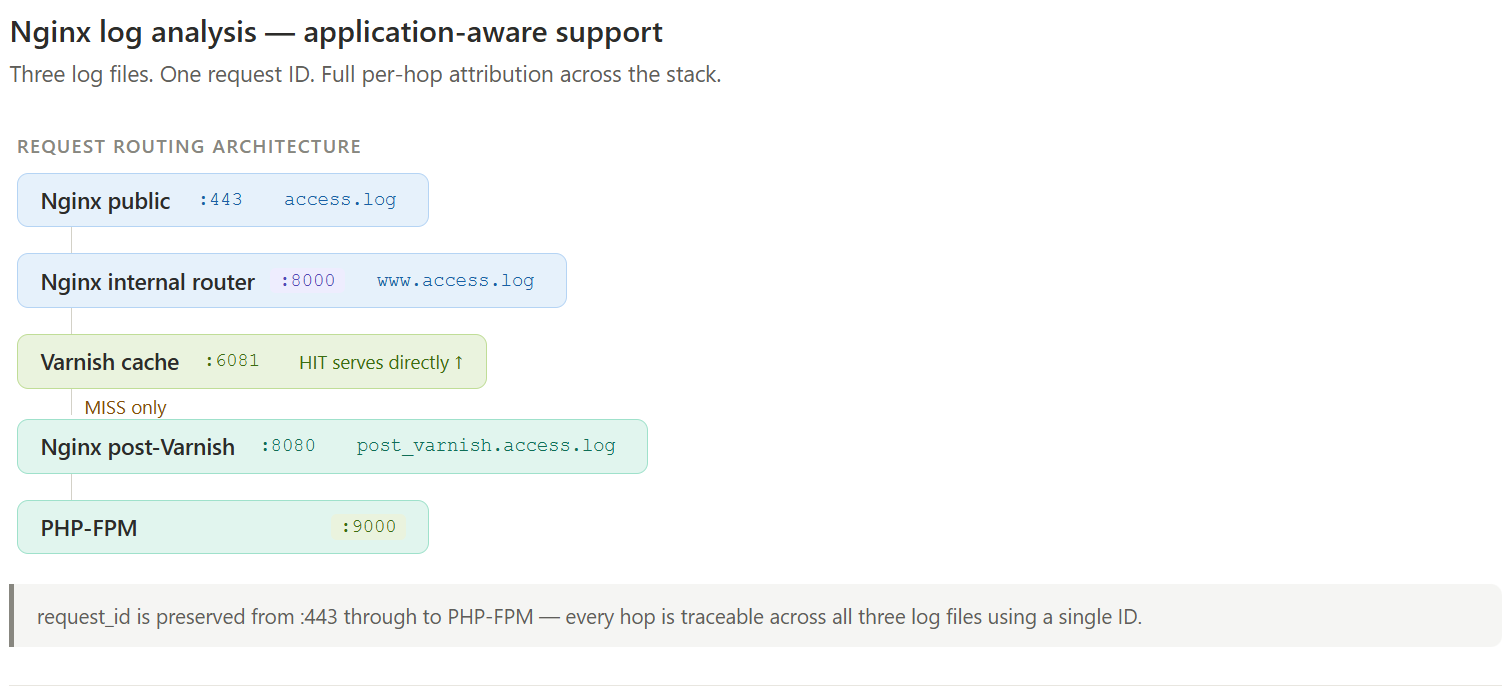
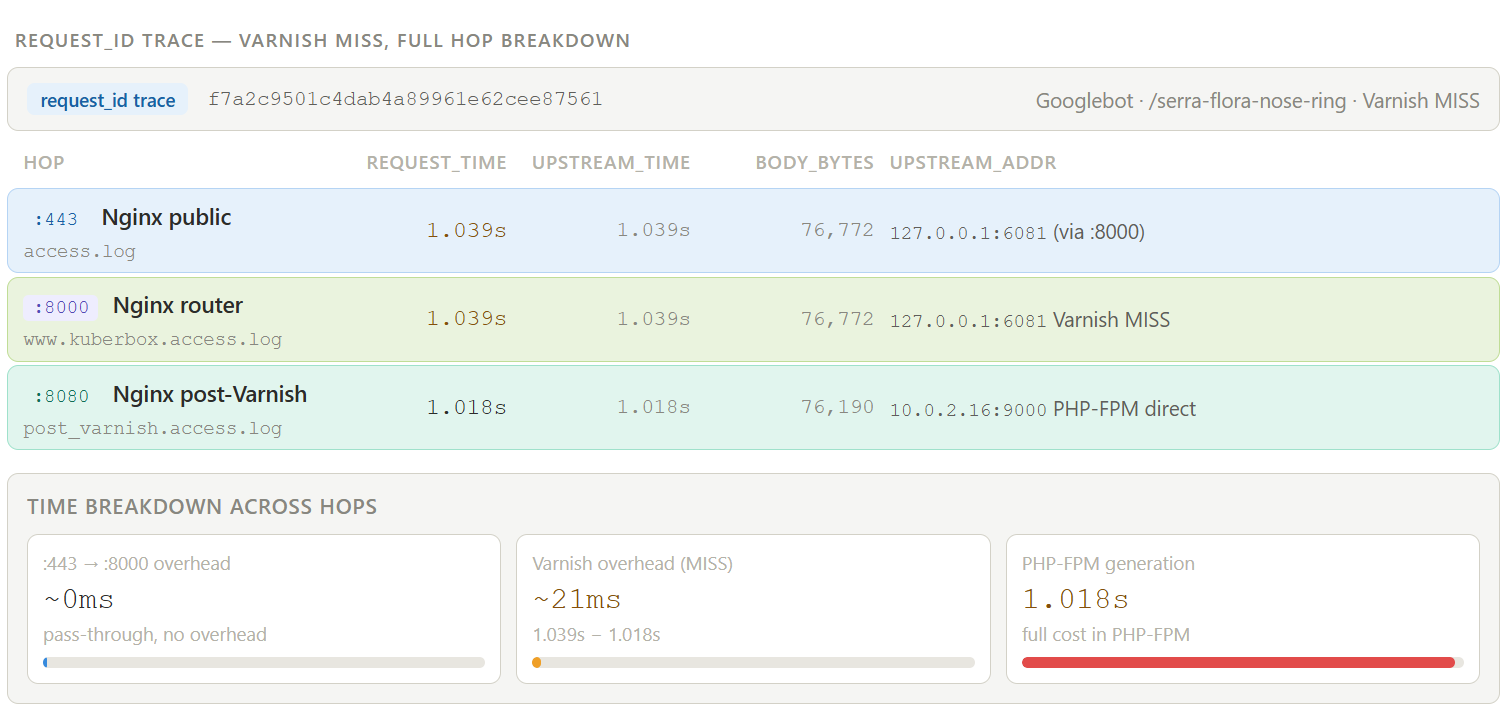
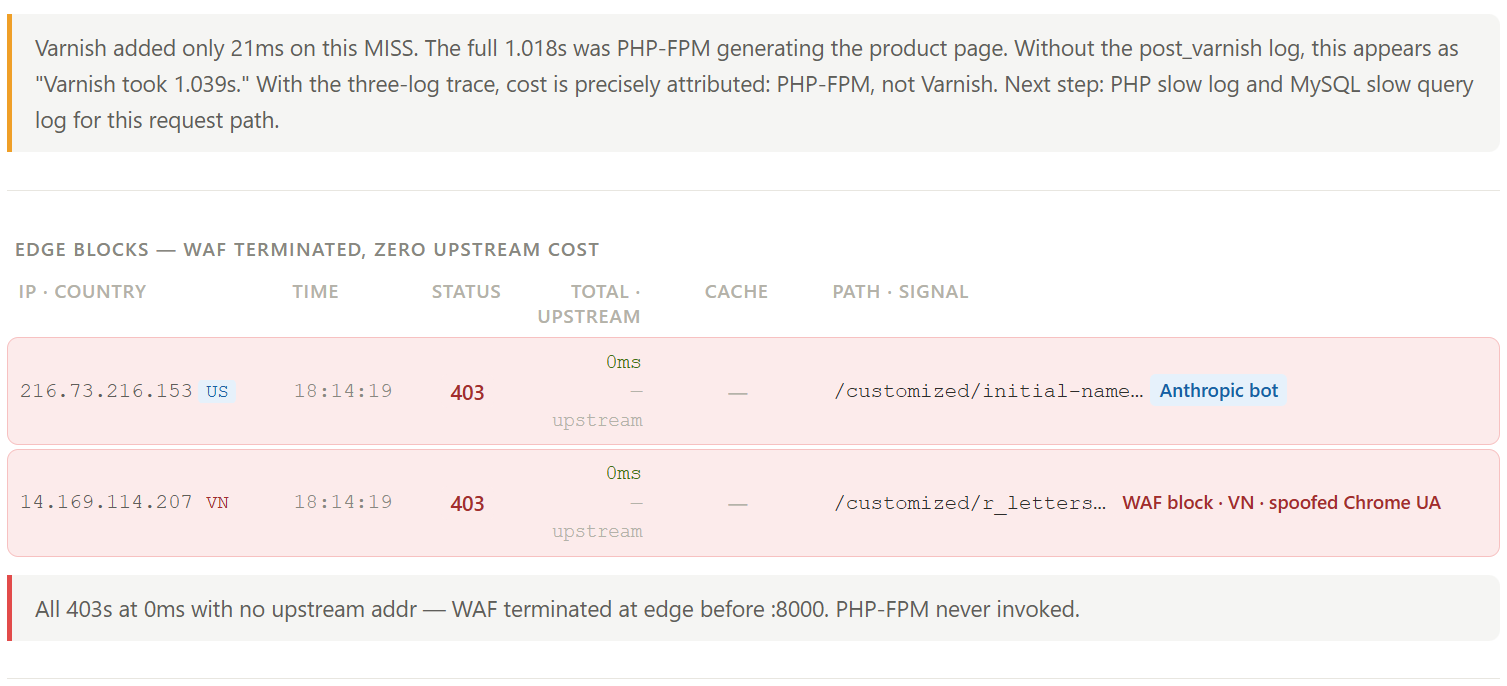
Reading the right logs, in the right order. Nginx access logs are the first layer of signal: response times, error rates, IP-level patterns, clients failing security challenges. Anomalies there direct the investigation deeper — into PHP slow logs, application error logs, query logs — each layer narrowing the diagnosis. The incoming request picture tells you whether something is wrong; the deeper logs tell you where.
Understanding the integration layer. When a symptom appears, the question is not just “what component is slow” but “what is that component waiting for.” The answer is often an upstream dependency — an API, a queue, a third-party service — that sits outside the infrastructure entirely.
Why this matters for support?
When something breaks, the path from symptom to cause determines how long the merchant is affected. A support team with application context moves faster through that path because they are not starting from first principles each time.
Consider a real scenario: checkout is slow, but the server looks healthy. The
investigation starts at Nginx access logs — response times are elevated on a specific request path. PHP slow logs confirm the delay is in a particular call. The bottleneck traces to a tax API responding in eight seconds. The third party is degraded.
At that point, resolution is not a hosting task. It is a coordination task: the agency developer needs to implement a timeout and a fallback, or the third-party support team needs to be contacted, or the merchant needs to be informed so they can make a business decision. Application-aware support means arriving at that handoff point in minutes rather than hours, with a precise diagnosis rather than a vague report.
The value is in the speed and accuracy of the diagnosis, and in knowing exactly who needs to act on it.
The standard worth holding providers to
Before your next renewal, ask your hosting provider: if my checkout breaks at 10pm tonight and your infrastructure dashboard shows green, what do you do next?
The answer to that question defines whether you have infrastructure support or
application-aware support.
For eCommerce stores where the application is the revenue, the distinction matters considerably.